Is “THC Free” on the Front of the Box Something I Can Trust?
“THC free” sounds clear: no THC in the product, full stop. But a few words on the front of a CBD package are not the same as a verified result for the specific bottle in your hand. The phrase may describe a product’s intended formulation, a laboratory result below a test’s detection limit, or simply marketing language. To know what it means, look past the front panel and check the ingredient list, serving information, and a current third party lab test—ideally one tied to the product’s batch.
This matters whether you are shopping for a tincture, gummies, or another hemp-derived product. THC can be subject to legal restrictions, workplace testing policies, and individual sensitivities. No label can guarantee how a product will affect a drug test, and “THC free” should not be treated as a medical or legal promise. Here’s a practical way to assess the claim before you buy.
Start by asking what “THC free” means
There is no universal front-label phrase that, by itself, tells you exactly how much THC a product contains. A company might use “THC free” to mean that THC was not detected in a sample. But “not detected” does not necessarily mean absolute zero: it can mean the amount was below that laboratory method’s limit of detection or quantification.
Those limits matter. A lab report may show a result such as “ND” (not detected), or it may list a small measured amount. Read the report’s notes and units rather than relying on a bold claim. Also check which THC compounds were tested. A useful report should identify the analytes tested—for example, delta-9 THC and, where relevant to the product and applicable rules, other forms such as THCA. A vague result that says only “THC: pass” gives you less information.
Even a strong lab result is a snapshot of the tested sample, not a guarantee that every bottle ever made is identical. That is why matching the report to the product’s batch or lot is so important.
Find the report for your actual batch
A COA, or certificate of analysis, is a laboratory report that may provide cannabinoid results and other testing details. A QR code on packaging can make the report easy to find—but only if it links to the lab report document or a page where that exact report is accessible. A QR code that sends you to a company homepage, a general product page, or a signup form does not answer the key question.
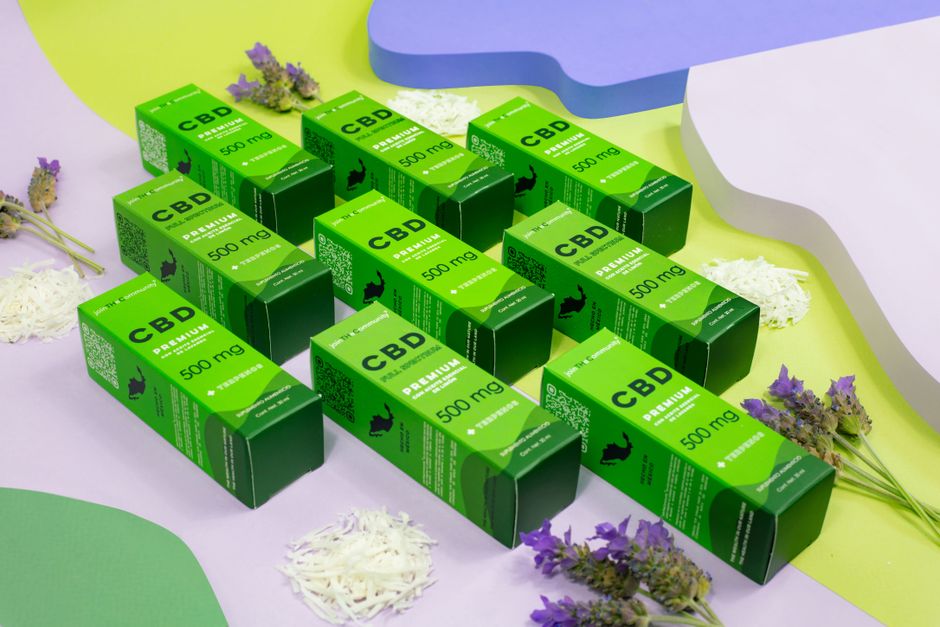
Look for a batch/lot number matching system: a clear way to enter or confirm the number printed on your package and retrieve the corresponding COA. Compare the number on the bottle broad spectrum CBD or box with the report itself. If they do not match, ask the company for the correct document rather than assuming the report applies.
Before relying on a COA, check that it identifies the product, the tested batch, the laboratory, and the date of testing. Look for a complete report rather than a cropped image of one result. The laboratory should be independent of the brand, and the document should show actual findings—not merely a pass/fail badge. A credible company should be able to explain its testing and help you locate the right report.
A quick COA checklist
- Does the report’s product name and batch or lot number match your package?
- Can you see the tested cannabinoids and their individual results?
- Does the report explain “ND,” detection limits, and units?
- Is the lab identified, and is the report recent enough to correspond to the product being sold?
- Can you access the full document, not just a marketing summary?
Check CBD per serving—not just the big number
Package fronts often feature a large milligram count, but that number may be the amount in the entire bottle rather than in one serving. Both figures can be useful; they simply answer different questions. The bottle total helps you compare overall product strength and value. The serving amount helps you understand how much CBD you would take at a time.
For example, a 1,000 milligram tincture in a one ounce bottle is roughly 30 servings, about 33 milligrams per serving, assuming the bottle provides about 30 one-milliliter servings. Actual serving size can vary, so check the directions and dropper markings. If a label displays “1,000 mg” prominently but does not make clear that this is the bottle total, the number can be easy to misread.
It is also worth doing the basic math on price. Divide the price by the total milligrams of CBD—not by a vague “strength” claim—to compare products on a like-for-like basis. Then confirm that the advertised milligrams refer to CBD specifically, rather than a broader blend of cannabinoids.
“Total cannabinoids” is not the same as a CBD amount
Some labels advertise “total cannabinoids” without clearly stating how many milligrams of CBD the product contains. That phrase could include CBD and other cannabinoids. It does not, on its own, tell you the CBD amount, and it certainly does not establish that the product is THC free.
Look for a clear CBD quantity on the package and compare it with the COA. The report may list individual cannabinoids in milligrams per gram, milligrams per milliliter, or as a percentage. Make sure you understand the units and whether the result is for the tested sample or the entire package. If the label makes a specific CBD claim but the report is hard to interpret—or does not support that claim—ask the manufacturer for clarification.
Also read the ingredient list. Hemp-derived CBD products are not interchangeable with products made from hemp seed oil. The plant’s seeds do not naturally provide the same CBD content as extracts made from cannabinoid-rich parts of the plant.
Watch for the hemp seed oil bait-and-switch
“Hemp oil” is an imprecise phrase. It may refer to hemp seed oil, a culinary oil that can be used as a carrier, or it may be used loosely in marketing for an extract. Hemp seed oil can be a legitimate ingredient, but it is not a substitute for disclosed CBD. A bottle that prominently says “hemp oil” or features a hemp leaf is not necessarily a CBD product.
Read the Supplement Facts or product information panel, ingredient list, and cannabinoid disclosure. If the product claims to contain CBD, you should be able to find a specific CBD amount and a COA that confirms cannabinoid content. If the only named oil is hemp seed oil and there is no CBD quantity, do not infer that it contains a meaningful dose of CBD from the packaging imagery alone.
Full spectrum, broad spectrum, and isolate: what they suggest
These terms describe different kinds of hemp extracts, but they are not a replacement for checking the lab report. Formulations and definitions can vary, so use the product’s ingredient information and COA to confirm what is actually present.
- Full spectrum: Generally describes an extract intended to retain multiple hemp compounds, potentially including THC. A full-spectrum product is not the obvious choice if avoiding THC is a priority; verify the report and understand that legal limits and product formulations vary.
- Broad spectrum: Generally describes an extract containing multiple hemp compounds with THC removed or reduced. That does not automatically prove there is zero THC. Look for a batch-specific coa thc result, including the report’s detection limits.
- Isolate: Generally refers to CBD that has been separated from most other hemp compounds. An isolate-based formula may be designed to avoid THC, but the finished product still needs testing. Cross-contamination or manufacturing variation cannot be ruled out from the word “isolate” alone.
In short, the extract type can tell you what the manufacturer intends to put in the formula. The batch report tells you what the lab found in the sample it tested.
What a useful “THC free” label should offer
A trustworthy label is not just a slogan. It should make it reasonably easy to find the product’s CBD amount, serving size, ingredient list, and a report for the relevant batch. For a shopper focused on THC, the COA should clearly show the THC result and explain what “not detected” means in that test.
Brands such as Joy Organics may come up in conversations about CBD products and testing. Treat any brand’s claims the same way: inspect the specific product and batch rather than assuming a company name, product category, or “THC free” phrase settles the question. The same consumer-checking principle applies to products covered in outlets such as The Daily News (thedailynewsonline.com): reporting or a brand mention is not a substitute for reviewing the evidence on the package you are buying.
If a QR code is provided, scan it and confirm that it takes you to the actual lab report document or a working report lookup—not merely a homepage. A tool or system that lets you enter the package’s batch/lot number and retrieve its matching COA is more useful than a generic certificate floating on a website. Brands and publishers may also use services such as Trinity Audio to make written content available in audio form; that can help with accessibility, but listening to a product discussion is not the same as verifying a lab result.
Red flags worth pausing over
- The label says “THC free,” but no COA is available.
- The QR code goes to a homepage and there is no way to find the report for your lot.
- The report’s batch number does not match the package, or there is no batch number to compare.
- The label lists “total cannabinoids” but never states the CBD amount.
- The package implies CBD content, but the ingredients and report point only to hemp seed oil.
- The COA shows a broad “pass” without cannabinoid values, units, or testing limits.
- The marketing promises to treat, cure, or prevent a disease. Such claims deserve particular caution and are not established by a lab report.
A practical way to decide
- Read the whole label. Find CBD per serving, CBD per bottle, serving size, and the complete ingredients.
- Identify the extract type. Full spectrum, broad spectrum, and isolate are clues—not proof of the final THC content.
- Scan the QR code or search the company’s report page. Look for the actual COA, not just a product description.
- Match the batch/lot number. Make sure the COA applies to the package in front of you.
- Read the THC result carefully. Check which compounds were tested and what “ND” means in that lab’s method.
- Compare the CBD claim with the report. Confirm that the reported amount supports the label’s stated CBD content.
The bottom line
“THC free” on the front of a box is a claim to investigate, not proof to take on faith. The most useful evidence is a current, batch-matched third-party lab report with a clearly stated THC result, readable testing limits, and a specific CBD disclosure. Check how much CBD is in a serving as well as in the bottle, and do not confuse “total cannabinoids” or hemp seed oil with a disclosed CBD amount.
If a company makes the report easy to access and its batch/lot number matching system works, you have a better basis for judging the claim. If the report is missing, mismatched, or too vague to interpret, consider choosing a product with clearer documentation. And if avoiding THC is critical for legal, employment, or health-related reasons, remember that a label or COA cannot guarantee a particular outcome—ask a qualified professional or relevant authority for guidance specific to your situation.